Industrial heat is one of the hardest parts of the economy to decarbonize. Roughly two-thirds of all industrial energy demand is for heat, and most of it still comes from burning fossil fuels. Thermal energy storage (TES) is the missing piece that lets clean electricity replace that combustion.
The core idea
Thermal energy storage does one simple thing: it decouples when energy is captured from when it is used.
- When renewable electricity is cheap and plentiful, a TES system converts it into heat and stores it.
- When a factory needs process heat — at night, during a price spike, or on a calm, cloudy day — the system discharges that stored heat on demand.
This is exactly what a battery does for electricity. The difference is that storing heat is dramatically cheaper than storing electricity, because the storage medium can be something as ordinary as molten salt, water, or rock.
Why it matters for decarbonization
Three reasons make TES strategically important:
- It unlocks cheap renewables for heat. Solar and wind are now the cheapest sources of new electricity, but they are intermittent. TES turns that intermittent electricity into firm, on-demand heat.
- It is capital-efficient. Per kilowatt-hour of capacity, thermal storage costs a fraction of electrochemical batteries.
- It fits existing plants. Most industrial processes already run on steam, hot air, or hot fluid. A TES system delivers heat in the same form, so retrofits are realistic.
Where IsoTES® fits
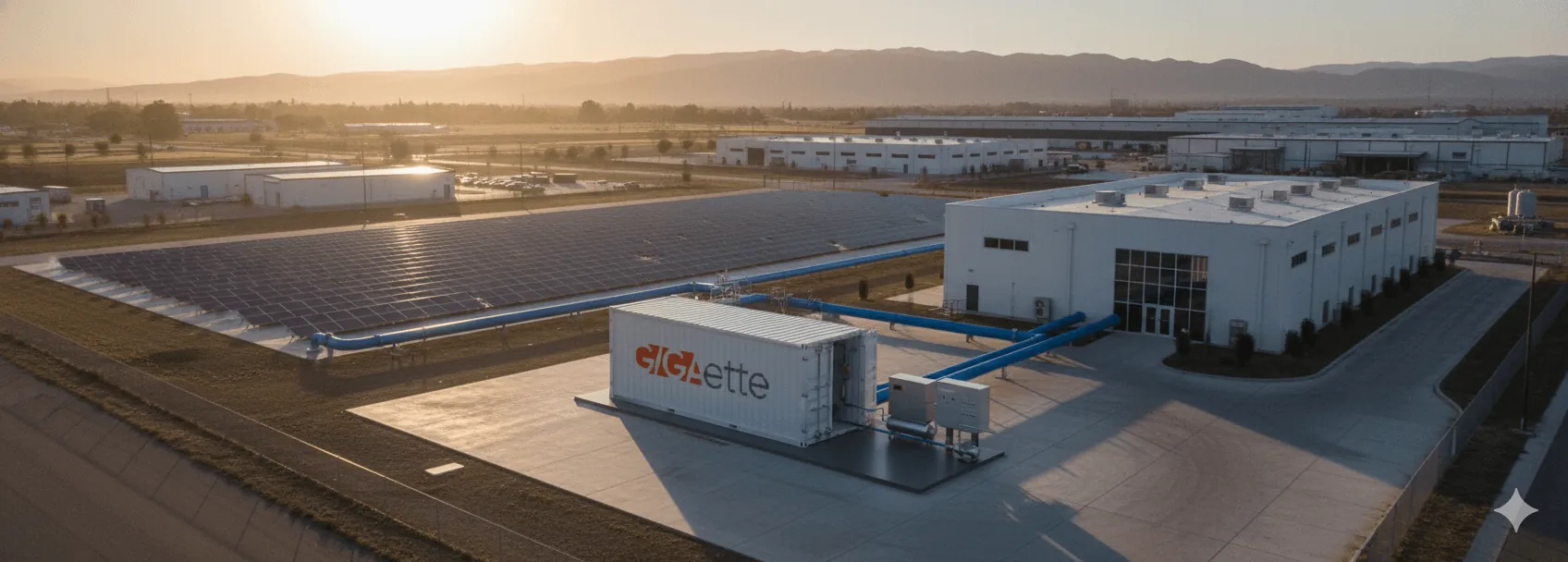
GIGAette’s IsoTES® is a single-tank thermal energy storage system that maintains a sharp temperature boundary inside one vessel, delivering heat at a constant output temperature throughout discharge. That constant-temperature behavior is what industrial processes actually need — and it is what conventional two-tank systems struggle to provide cost-effectively.
If you are new to the trade-offs between heat storage and electrochemical storage, the next article breaks it down in detail.
The bottom line
Thermal energy storage is not a niche curiosity — it is core infrastructure for industrial decarbonization. As clean electricity gets cheaper and carbon gets more expensive, the ability to store heat affordably becomes a decisive advantage.