A factory is not only a place that consumes energy; it also throws an enormous amount of it away. Every time fuel is burned or electricity is drawn to heat, melt, or dry something, a large share of that input leaves as heat rather than as product. That unused heat is what we call industrial waste heat.
Where industrial waste heat comes from
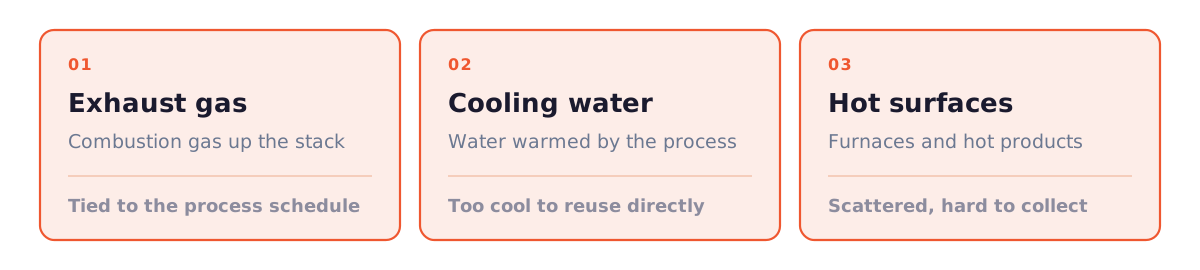
Industrial waste heat is the heat left over once a process has done its job — or the heat that never made it into the job at all. It leaves the plant along three main routes.
How much is wasted
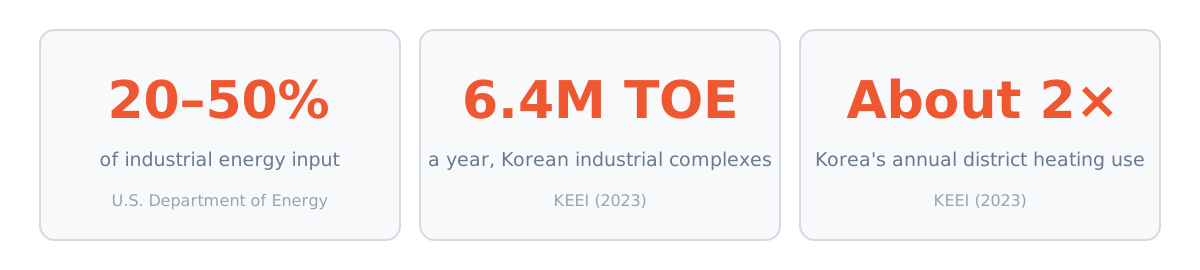
The U.S. Department of Energy estimates that roughly 20–50% of the energy fed into industry is lost as waste heat. In Korea, the Korea Energy Economics Institute produced the first national estimate in 2023: 6.4 million TOE a year from industrial complexes alone, about twice the heat the country’s district heating uses in a year. Low-grade heat around 100°C, in particular, is hard to feed back into a process, and most of it is simply discarded.
Why it has gone unrecovered
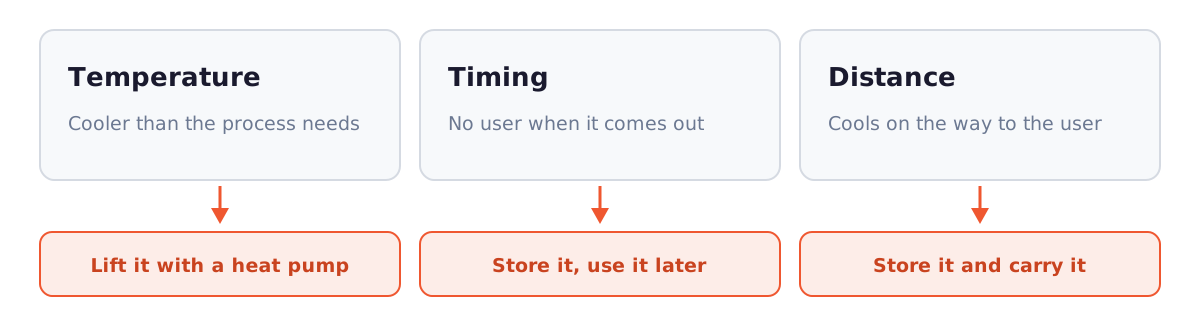
Three barriers explain why so much of this heat is still thrown away: it is cooler than the process needs, it comes out when nothing needs it, or the nearest user is so far away that it cools off in transit. Each has an answer — lift the temperature with a heat pump, bridge the timing with storage, and cover the distance by storing the heat and carrying it.
The bottom line
Waste heat is energy the plant has already produced, so every unit put back to work is fuel that does not need to be burned. The question is not whether the heat is there, but whether it can be used at the temperature and the time it is needed.
IsoTES® is GIGAette’s constant-temperature thermal storage system, designed to hold waste heat and release it at the same temperature when it is needed.
If you want to look at what your own plant is losing, request a technical meeting.
For how factories actually put waste heat to use, see:
Sources
- Park, S. and Oh, S., Analysis of Heat Consumption Characteristics in Industrial Complexes and Estimation of Waste Heat Potential, Korea Energy Economics Institute, Basic Research Report 23-11 (summarised in Issue Paper 24-11) — 6.4 million TOE of waste heat a year, averaging 13.7% of final energy consumption; about twice district heating consumption (2.8 million TOE)
- U.S. Department of Energy, “Waste Heat Recovery Basics” — 20–50% of industrial energy input lost as waste heat via exhaust gas, cooling water, and hot equipment and product surfaces