Factories throw away more heat than most people expect. The U.S. Department of Energy estimates that roughly 20–50% of the energy fed into industry is lost as waste heat through exhaust gas, cooling water and hot equipment surfaces. One estimate puts the waste heat from Korean industrial complexes alone at 6.4 million TOE a year.
What waste heat is and how much of it is lost was covered in an earlier post. This one takes the next question: how is waste heat actually being used today?
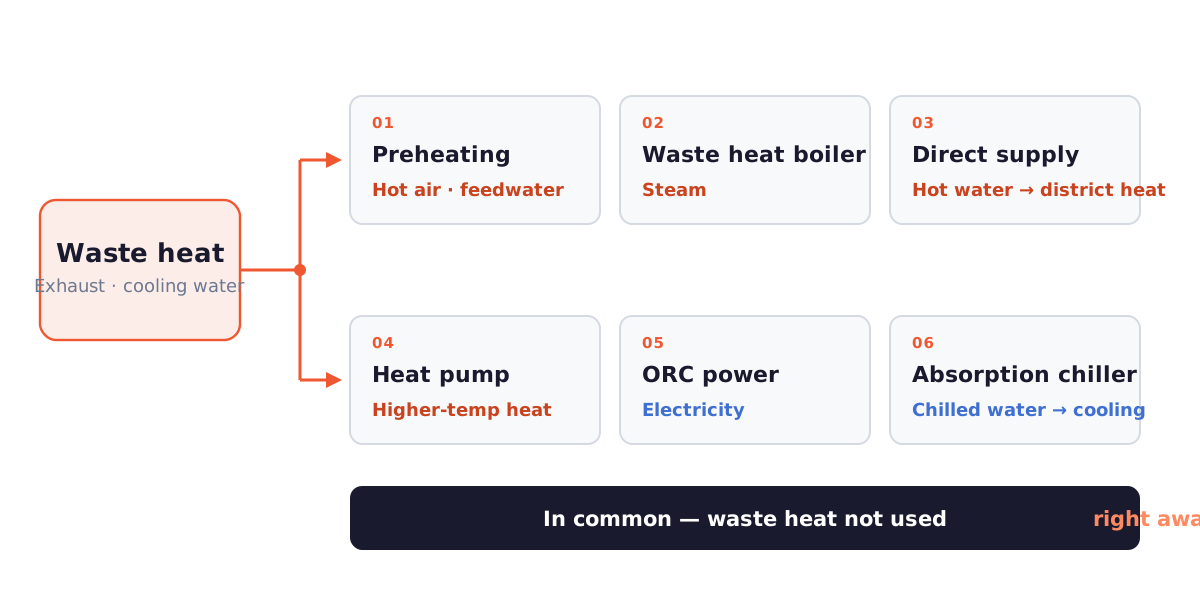
Methods differ by what they produce
Using waste heat means turning it into something useful. That might be hot air fed back into the same process, steam or hot water sent somewhere else, or electricity and chilled water.
① Preheating — feed it back into the same process
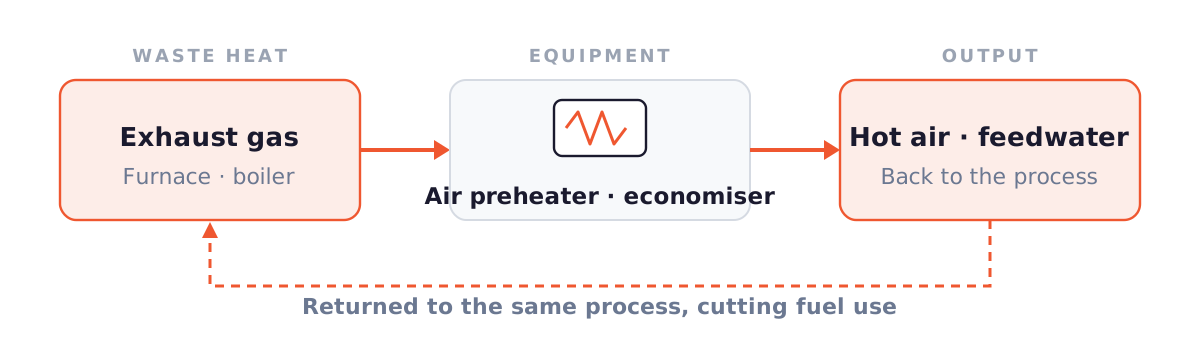
Exhaust heat warms combustion air or boiler feedwater before it goes back into the same process. Because the heat does not have to travel far, this is usually the first option considered — but the amount that can be recovered is capped by what that one process can take back.
② Waste heat boiler — make steam
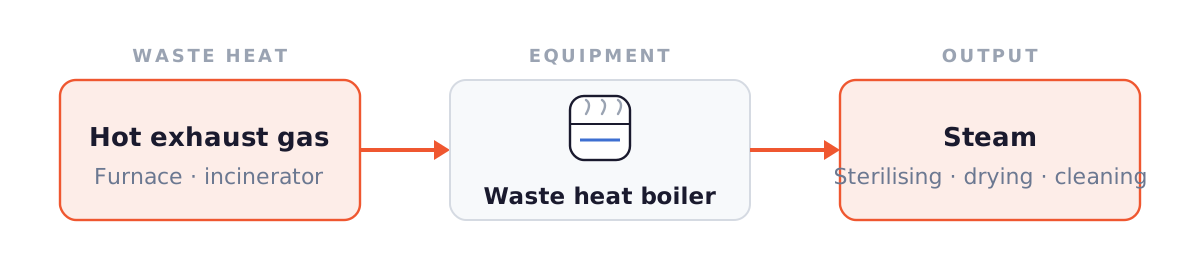
Hot exhaust gas boils water into steam. Steam is the most common way to move heat around a plant, so a waste heat boiler turns waste heat into heat for other processes, not just the one it came from.
③ Direct supply — send hot water elsewhere
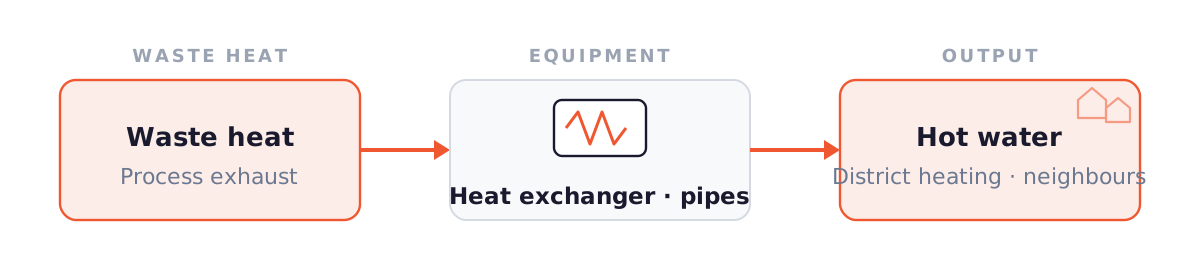
Water warmed by waste heat is piped to a district heating network or a neighbouring site. The German aluminium smelter TRIMET sends water heated to about 130°C through a 700-metre pipe into a city heating network.
④ Heat pump — raise the temperature
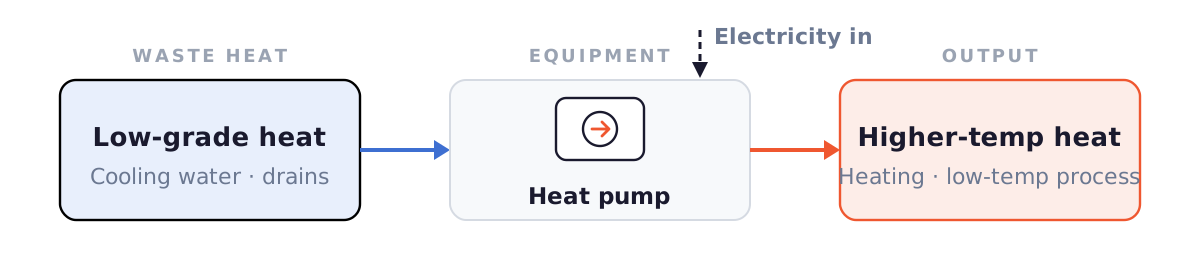
Electricity is used to lift low-grade waste heat to a useful temperature. Heat from cooling water that would otherwise be discarded becomes usable for heating or low-temperature processes, at the cost of the electricity needed to lift it.
⑤ ORC power — generate electricity
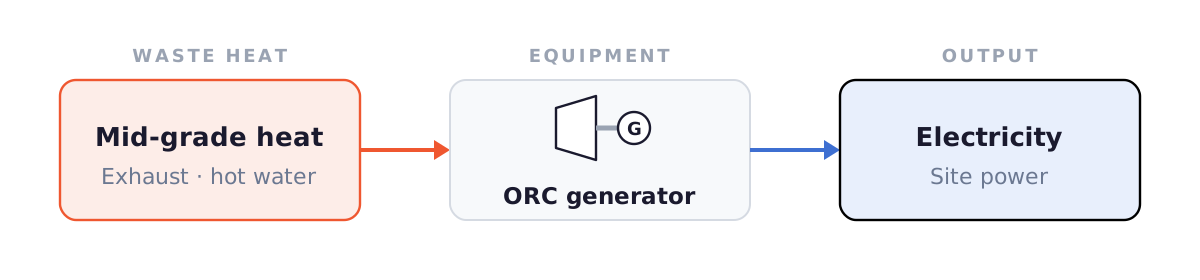
An organic Rankine cycle (ORC) uses a fluid that boils at a lower temperature than water, so even medium- and low-grade waste heat can drive a turbine and make electricity. Converting heat to power loses a large share of it, though, so if there is a use for the heat itself nearby, using it as heat is usually the better choice.
⑥ Absorption chiller — cool with heat
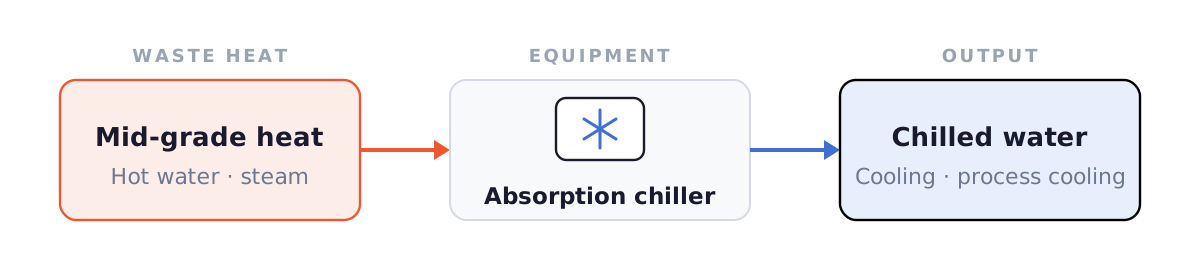
Waste heat, rather than electricity, drives the chiller to make chilled water. Its advantage is that it gives waste heat a use in summer, when there is no heating demand.
What the six methods have in common
Waste heat has to be used the moment it comes out. If nothing needs it then, it is simply lost.
Preheating only matters while the furnace is running, and steam from a waste heat boiler is only useful if a process needs steam at that time. District heating demand drops in summer; absorption chillers have little to do in winter.
Industrial waste heat, meanwhile, follows the production schedule. In batch processes, or with equipment that starts and stops several times a day, the hours when waste heat pours out and the hours when heat is needed often fail to line up. That is why waste heat is still lost even where recovery equipment is installed.
The bottom line
There are already several ways to use waste heat, and the right one depends on temperature and use. But nearly all of them assume the heat is used the moment it comes out.
So what about the waste heat that cannot be used right away? One answer is to store it and draw on it when it is needed. GIGAette’s IsoTES® is a constant-temperature thermal energy storage system built on that idea; storing waste heat for later use is the subject of the next post.
If you would like to work out which method suits your plant’s waste heat, request a technical meeting.
Sources
- Waste Heat Recovery: Technology and Opportunities in U.S. Industry — U.S. Department of Energy (2008) — 20–50% of industrial energy input lost as waste heat via exhaust gas, cooling water and equipment and product surfaces
- Waste heat recovery workshop presentation — National Academies — categories of recovery: heat exchangers, load preheating, power generation and low-temperature technologies using heat pumps
- Study on the Heat Recovery Design Methods for the Flue Gas from Combustion and Incineration Processes — KoreaScience — economiser, evaporator and superheater stages of a waste heat boiler
- Park, S. and Oh, S., Analysis of Heat Consumption Characteristics in Industrial Complexes and Estimation of Waste Heat Potential, Korea Energy Economics Institute, Basic Research Report 23-11 — 6.4 million TOE of waste heat a year from Korean industrial complexes
- Cover photo: Mikhail Ilin / Unsplash (colour-adjusted)