A chemical plant has a network of pipes that carries steam across the site — its steam grid. Production and use on that grid rarely line up exactly. Surplus steam is dumped, and during short peaks in demand there is not enough.
The previous post looked at five ways to keep waste heat that cannot be used right away. This one visits a plant that is already doing one of them: holding the heat for later.
Too much steam, then too little
Yara’s fertiliser plant in Porsgrunn, Norway, had the same problem, and its answer was to hold the surplus in a heat battery. The system, supplied by thermal storage company EnergyNest, has run since January 2023.
How the heat battery stores the steam’s heat
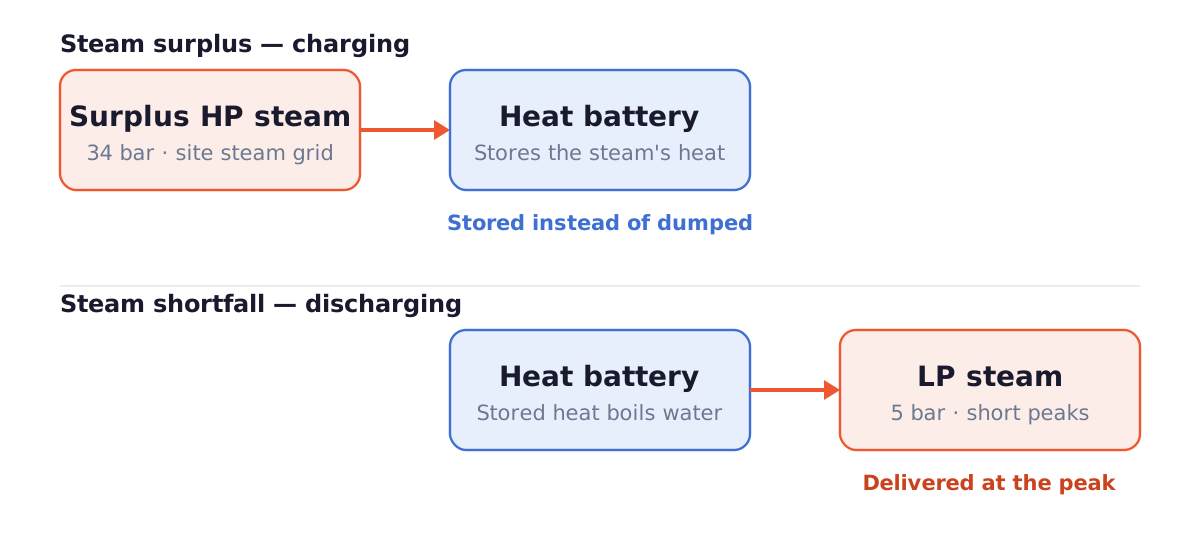
When the plant has surplus steam, it goes to the heat battery. The steam’s heat is stored in a concrete-based material inside, and the steam, having given up its heat, turns to water. When steam runs short, the stored heat boils that water again to make steam for the plant.
The system stores and releases heat several times a day; according to a March 2024 report, it did so more than 4,000 times in its first year. Rather than storing today’s heat for tomorrow, it smooths out the small gaps that open up again and again throughout the day.
The project in numbers
| Item | Detail |
|---|---|
| Location | Yara fertiliser plant, Porsgrunn, Norway |
| Storage capacity | 4 MWh (4 modules) |
| Charging | 34 bar high-pressure steam |
| Discharging | 5 bar low-pressure steam |
| In operation | Since January 2023 |
| Savings | 12 GWh of electricity imports and 6,000 t of indirect CO₂ a year (company figures) |
What this case shows
Yara’s heat battery is not large, but it shows every day on a working plant that steam that would have been dumped can be held and used again.
It also shows that storage is not only about “using today’s surplus tomorrow”. Simply bridging gaps that last minutes or hours can cut the steam that is dumped and reduce the need to raise extra steam at every peak.
The bottom line
Instead of dumping surplus steam, Yara’s fertiliser plant holds it and releases it when steam runs short, closing the time gap between when steam is in surplus and when it is needed. Storing waste heat for later use is already running on a real plant.
GIGAette’s IsoTES® is technology in the same direction, aiming to hold a steady output temperature while the stored heat is drawn on.
If you would like to look at when your own steam grid runs long and when it runs short, request a technical meeting.
For the three principles behind storing heat, see:
Sources
- YARA: Steam grid balancing in integrated chemical plant — EnergyNest — charging with 34 bar high-pressure steam, discharging 5 bar low-pressure steam, steam grid balancing to reduce dumped excess steam, steel and Heatcrete modules
- Storing high-temperature heat for commercial clients in Denmark, Norway and Belgium — solarthermalworld.org (5 March 2024) — commissioned December 2022, running since January 2023, 4 MWh (4 modules), more than 4,000 cycles in the first year
- Norwegian Minister of Energy visits ENERGYNEST’s thermal storage solution at Yara — EnergyNest (15 October 2024) — in operation; 12 GWh of electricity imports and 6,000 t of indirect CO₂ saved a year
- Cover photo: Mikhail Ilin / Unsplash (colour-adjusted)